Diamonds: a considered choice
A practical reading of beauty, origin, reports and the finished jewel.
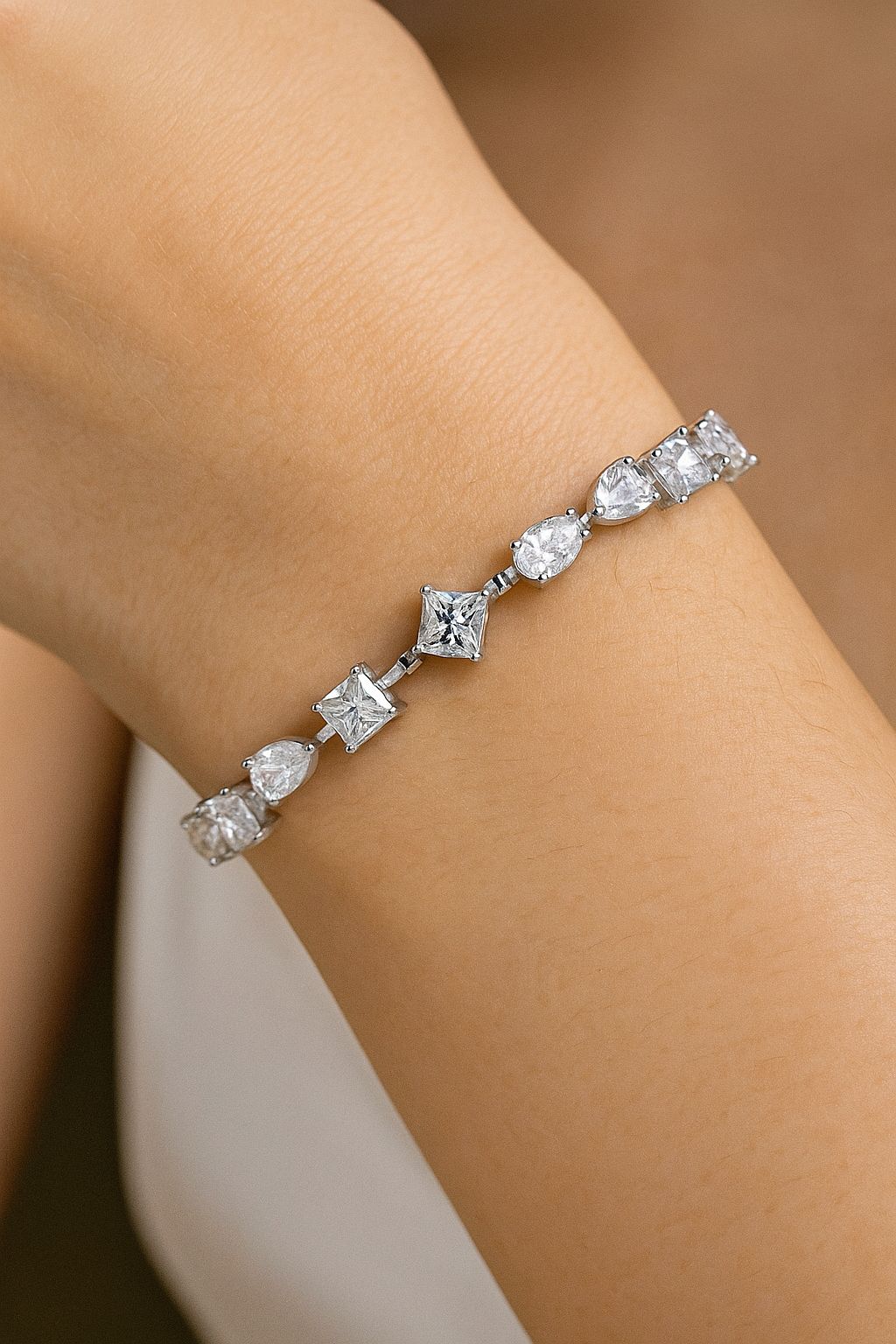
Choosing a diamond is not a contest to collect the highest grades. It is a sequence of decisions about what you enjoy seeing, what you want documented and how the stone will live inside a jewel. This guide separates technical descriptions from personal preferences and gives you a practical method for discussing a shortlist with the Nova team. It covers loose stones and finished pieces without assuming that every available product has the same report or specification.
Begin with the jewel you intend to wear
Write a short brief before comparing stones. Name the jewel, its intended wearer, the occasions on which it will be worn and the visual effect you prefer. A discreet pendant, an architectural ring and a pair of earrings do not ask the same questions of their centre stones. Include any restrictions you already know: a ring that must sit beside another ring, a pendant that should fit an existing chain, or a gift whose size is still uncertain.
Divide the brief into essentials and preferences. Essentials might include a documented origin, a firm total budget or an agreed delivery requirement that the atelier must confirm. Preferences might include a longer outline or a softer visual contrast. This distinction helps a consultation remain focused without treating every attractive alternative as a reason to restart the entire project.
Use the 4Cs as a description, not a verdict
The familiar 4Cs describe carat weight, colour, clarity and cut. They organise a technical conversation; they do not replace your assessment of the finished jewel. Treat each entry as a question with evidence behind it, rather than combining the letters into a single imagined score.
Build a comparison sheet with one row per stone. Record the laboratory and report date, the stated characteristics, the measurements, the origin description and the asking price for the actual proposed item. Leave a visible blank where information is missing. Do not fill that blank from a photograph, a collection name or another stone’s report. Finally, add a separate column for your own observations. Keeping documented characteristics apart from personal reactions makes it easier to explain why one candidate appeals to you without presenting that preference as a laboratory conclusion.
Compare measurements as well as carat weight
Carat is a measure of mass; one metric carat equals 0.2 grams. It is not a direct measurement of the outline you see from above. For a practical comparison, ask for the stone’s actual length, width and depth, then view those dimensions in relation to the proposed setting.
A useful exercise is to draw the face-up outline at actual size on paper and place it where the jewel will be worn. This is only a scale exercise, not a prediction of sparkle or colour. It nevertheless helps distinguish a desire for greater visual coverage from a desire for a particular weight. When a quotation describes several diamonds together, ask whether the weight is the centre stone’s weight or the combined total. Record both separately when both are supplied; never assume that an advertised total belongs to a single stone.
Separate shape from the way the stone handles light
Shape names an outline; cut also concerns the arrangement and finish of facets. Round, oval and pear are therefore starting points for a conversation, not complete descriptions of performance. Ask to see the actual candidate slowly turned, with the camera and lighting kept reasonably consistent between comparisons.
Look for an impression you can describe in ordinary words: lively, calm, sharply contrasted or softly distributed. Note any area that remains persistently dark as the stone moves, then ask the adviser to explain what you are seeing. A single paused frame can emphasise one moment rather than the overall appearance. Avoid choosing solely from a dramatic spotlight clip. Ask for an additional, quieter view and compare the stone at a realistic viewing distance. This method is an observation exercise, not an attempt to assign a formal cut grade yourself.
Turn colour and clarity into useful questions
Instead of asking for an undefined “perfect” stone, ask what difference a proposed specification makes to your own shortlist. Have the adviser show the candidates under the same conditions and identify which distinctions come from a report and which are visible in that presentation. A zoomed image and a normal-distance view answer different questions, so request both where available.
Keep your preferences explicit. You might prefer a warmer appearance in a particular design, or place more importance on a clean visual impression than on a higher printed category. Neither preference authorises anyone to omit the documented description. When a characteristic is shown close to an edge or a setting contact point, ask whether it affects the proposed mounting or care requirements. Do not diagnose durability from a phone photograph: make that a question for the professional examining the stone.
Choose the origin openly
Natural and laboratory-grown diamonds have essentially the same chemical composition and crystal structure, but different origins. A simulant is a different material. These terms must not be used interchangeably. The origin offered for your purchase should be stated clearly in its description and relevant documentation.
Decide what that distinction means for your own project without accepting a universal moral or financial ranking. Ask what evidence supports any separate claim about traceability, production conditions or environmental impact. “Laboratory-grown” alone is not a complete environmental assessment; “natural” alone is not a documented chain of custody. Compare proposals within a clearly identified category and record the exact stone being supplied. Do not rely on the visual similarity of two photographs to establish origin, and do not assume that either origin guarantees a future resale outcome.
Read the report that belongs to the stone
Record the issuing laboratory, the document number, its date and the service it describes. Reporting terminology can change: GIA introduced Premium and Standard descriptions for its revised D-to-Z laboratory-grown diamond assessment from October 2025. Do not force every document into an older template or assume different laboratories use identical wording.
Read comments and limitations as carefully as the headline result. Ask the seller to connect the supplied stone to the document and to explain any discrepancy between the listing and the report. Keep a copy alongside the quotation and invoice. A report should not be treated as an offer to buy the stone back, a price guarantee or an endorsement of the retailer. Equally, a report attached to one centre stone does not automatically describe every accent stone or every other product in a collection.
Judge the stone in the proposed setting
Ask for front, side and underside views of the proposed jewel. Identify the height of the centre, the location of contact points and the space required beside an existing ring. Discuss whether the design prioritises an open appearance, a more enclosing outline or a particular relationship between centre and accent stones.
For an existing Nova piece, use its actual product measurements and available options. For a bespoke project, ask which dimensions are already fixed and which remain subject to design approval. A rendering is a communication tool, not a substitute for the final specification. Request clarification whenever a visual detail appears in an image but not in the quotation. Keep the stone choice and the setting choice connected: approving one while leaving the other undefined can make later comparisons confusing and can obscure the total scope of the order.
Compare complete proposals, not isolated prices
Give each quotation a version and compare like with like. Ask whether the figure covers the exact centre stone, accent stones, metal specification, chosen size, agreed finishing and any separately quoted services. Identify taxes, delivery charges and payment stages in the actual commercial terms rather than inferring them from an editorial article.
When a proposed replacement changes the stone, ask for an updated itemised description before approving it. A lower total may reflect a different scope; a higher total does not, by itself, prove a better match for your preferences. Mark unresolved questions explicitly and keep the answers with the quotation. Do not ask an adviser to guarantee future value. Instead, ask for the current evidence you need to make this purchase confidently. A careful proposal should help you understand what you are buying today, without relying on a speculative future outcome.
Plan care before the first wear
Diamond resists scratching well, but a finished jewel is not indestructible. GIA’s care guidance distinguishes resistance to scratching from the risk of damage through impact or existing characteristics. Treat the setting, every companion stone and any disclosed treatment as part of the care decision, not as an afterthought.
Ask Nova for instructions appropriate to the actual piece. Record how it should be cleaned, when it should be removed and what signs should prompt an inspection. Do not use an aggressive cleaning method because another diamond jewel tolerated it. Store the piece so that it is not rubbing against other jewellery, and keep its documents where you can find them. If a stone moves, a claw catches unexpectedly or the jewel has sustained an impact, pause wear and request an assessment rather than testing its strength yourself.
Make the final decision traceable
Before approval, read the final proposal once without looking at the images. Can you identify the stone, its origin, the material, the dimensions, the selected options and the documents you expect to receive? Then look at the images again and check that they illustrate the same version. This simple two-pass review separates attractive presentation from the actual agreement.
Keep questions specific: “Which report belongs to this centre stone?” is more useful than “Is everything certified?” “Which dimension might still change?” is more useful than “Will it look exactly like this?” Share the comparison with the Nova team and ask for any remaining uncertainty to be resolved in writing. The aim is not to eliminate personal feeling. It is to give that feeling a clear, documented foundation and to choose a creation whose character you understand.
FAQ
Is a larger carat weight always the better choice?
No universal choice follows from weight alone. Compare dimensions, the actual visual presentation, the proposed setting and the complete specification against your own brief.
Can a photograph establish a diamond’s origin?
Do not use a photograph as proof of natural or laboratory-grown origin. Ask for the description and appropriate documentation for the actual stone.
Does this guide certify Nova products?
No. It is an educational guide. A product’s specifications, reports, availability and terms are only those expressly stated for that item or in its agreed quotation.
- Carat
- A unit of mass used for gemstones, distinct from the karat notation used for gold fineness.
- Face-up dimensions
- The length and width considered when a stone is viewed from above.
- Specification
- The written description of the actual stone, materials, dimensions and options agreed for an order.
- Report scope
- The item and characteristics that a particular laboratory document actually examines.